
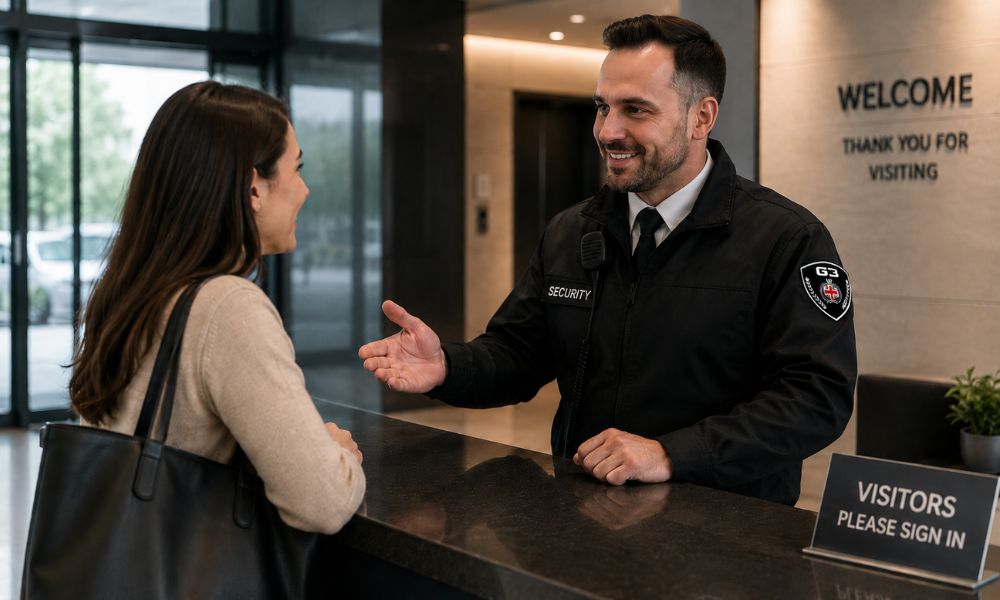
Managing challenging customers is one of the most demanding responsibilities a security guard faces. Whether working in retail, hospitality, events, or corporate environments, the ability to de-escalate tension, communicate with authority, and protect everyone’s safety is what separates a truly professional officer from the rest. This guide covers everything UK security personnel need to know. 1. Understanding Challenging Customer Behaviour Not all difficult customers are the same. Effective security guards recognise that challenging behaviour rarely exists in a vacuum, it is almost always driven by an underlying cause, whether that is frustration, intoxication, mental health difficulties, perceived injustice, or personal distress. A security officer should approach any situation in a calm and collected manner, both for the difficult customer and to maintain their employer’s credibility. The Security Industry Authority (SIA) mandates that all licenced officers receive conflict management training precisely because the human dimension of this work is so complex. Understanding the root cause of someone’s behaviour is the first step towards resolving it safely. Common triggers of difficult behaviour include: Alcohol or substance intoxication, particularly in licensed venues, pubs, and late-night settings Perceived unfair treatment, feeling singled out, discriminated against, or spoken to disrespectfully Mental health episodes requiring a sensitive, non-escalatory approach that distinguishes between illness and intent Loss prevention confrontations where customers feel accused or embarrassed Crowd frustration stemming from long queues, denied entry, or access control disputes at events General frustration transferred onto the nearest authority figure, often the security officer Today’s SIA-approved training includes scenario-based assessments covering vulnerability handling, recognition of modern slavery indicators, and safeguarding responsibilities, reflecting just how nuanced frontline security work has become. 2. Early Recognition The most effective conflict resolution happens before a situation changes. Experienced security officers develop strong situational awareness, the ability to read an environment and identify tension before it erupts into confrontation. Retail security guards are trained to recognise the signs of a potentially challenging customer, such as aggression, hostility, and disruptive behaviour. They are also trained to assess the level of risk and take suitable and proportionate action to prevent the situation from changing. Physical warning signals include clenched fists, sudden pacing, rigid posture, darting eye movements, raised shoulders, or the invasion of personal space. Experienced guards know how to spot warning signs such as clenched fists, sudden pacing, or raised voices and act quickly. Verbal warning signals include a raised voice, clipped or rapid speech, excessive swearing, making threats, even indirect ones, or repeating the same phrase with increasing intensity. Contextual signals include alcohol on the breath, erratic movement patterns, apparent disorientation, agitation when approached, or visible anger directed at staff or other customers. By identifying these signals early, a security guard can position themselves appropriately, alert colleagues, and prepare a calm verbal approach before the situation deteriorates further. 3.Calm Handling Strategies for Security Guards Crisis communication is a structured, evidence-based approach to reducing tension and steering interactions towards peaceful resolution. Handling conflict verbally is both an art and a science, rooted in psychology, communication theory, and practical experience. It involves using controlled communication techniques to calm aggressive individuals and guide them towards a peaceful outcome, it is not just about what is said but also how it is said, including tone, pacing, and body language. The fundamental principle is straightforward: dialogue and de-escalation must always precede the use of force. Physical intervention is a last resort, and proportionality is a legal requirement under UK law. Remain Calm and Composed A security officer’s composure directly shapes the emotional state of the person they are dealing with. Staying calm and professional is essential, even when faced with an agitated or aggressive customer, it sets a constructive tone from the outset and helps bring the situation under control. A clear head allows for measured, thoughtful responses that keep things from boiling over. The moment you appear flustered or unsettled, the person in front of you will sense it, and the situation will worsen as a result. Practise Active Listening One of the most powerful tools available is also the simplest, genuinely listening. In fact, one of the main things people who are angry or frustrated want is to be listened to. Security guards should practise actively listening, which means allowing a person to rant and yell without interrupting them. Demonstrate engagement through nods, sustained eye contact, and brief verbal affirmations. By showing that you are actively listening, you begin the process of building rapport, a critical foundation for any successful resolution. Show Empathy Without Emotional Investment Empathy is not the same as agreement. Phrases like “I understand how you feel” or “I can see why this is upsetting” can go a long way in diffusing tensions. The key distinction here is that empathy is a professional communication tool, it does not mean becoming emotionally invested in the situation, which would compromise your ability to manage it effectively. As a security guard, it is not your place to become emotionally invested in a situation. This lowers your professionalism and is only inviting more trouble from difficult customers Use Clear, Non-Confrontational Language The language a security guard uses can either defuse or inflame a situation. Avoid commanding or dismissive phrases. Use non-confrontational language and focus on problem-solving instead. Phrases like “Can we talk about what’s going on here?” or “I’m here to help find a solution” keep the conversation constructive. Tactical phrasing, the practice of transforming confrontation into cooperation, is a core competency taught across SIA-approved conflict management programmes. Maintain Professionalism Throughout Your professionalism protects both yourself and your employer. Every interaction reflects on the organisation you represent. It is fundamental to both the officer’s integrity and the company image that difficult customers are dealt with respectfully and smoothly. Even when a customer is being unreasonable, abusive, or threatening, maintaining a respectful and measured approach upholds your integrity and provides legal protection should the incident result in a formal complaint. 4. The Power of Body Language in Conflict Management Research consistently shows that how you say something matters as
- Home
- About Us
- About G3
- Mission, Vision & Values
- Security Company in Birmingham
- Corporate Social Responsibility
- Environmental Policy
- Health & Safety Policy
- Quality Policy
- Equality & Diversity Policy
- Workplace Pension Policy
- Workplace Drug & Alcohol Policy
- Anti-Modern Slavery Statement
- Lone Worker Policy
- Gallery
- FAQ
- Privacy Policy
- Leave Us a Feedback
- Services
- Careers
- Blog
- Contact Us
 Get a Quote